Between 2016 and 2019, a wave of small boxes promised to secure every device in your home just by plugging into your router: CUJO, Akita, RATtrap, Dojo, Keezel, Bitdefender BOX, Norton Core, F-Secure Sense, Winston, Syfer, Fingbox. This site reviewed most of them at the time and, for years, our old pages about them were among the most-visited on the domain.
Nearly all of those products are now discontinued. Several are literal bricks — hardware that stopped doing anything the day the company’s cloud went dark. If you own one, or you are looking at one on eBay, or you just want to know what to buy instead, this is the page. Status per device first, then why the whole category collapsed, then the 2026 replacements that do not repeat the mistake.
Status of each device (August 2026)
| Device | Maker, launched | Model | Status | Does the hardware still do anything? |
|---|---|---|---|---|
| CUJO Smart Firewall | CUJO AI, 2016 | Box + cloud; 2nd gen “free subscription” | Discontinued. Announced 29 Sep 2020; end of life and end of support 1 Mar 2021 (CUJO AI newsroom) | No — cloud-dependent; effectively a brick. Cisco Talos later published vulnerabilities found in the discontinued unit. |
| Norton Core | Symantec/Norton, 2017 ($279) | Router + Norton subscription | Discontinued. Sales ended 31 Jan 2019; support ended 15 Apr 2022 (Wikipedia, GadgetGuy) | Works as a plain router at best; security features gone. |
| F-Secure SENSE | F-Secure, 2017 | Router + subscription | Discontinued. End of sales 26 Oct 2020; all security features switched off 31 Dec 2023 (F-Secure community) | Continues as a normal (unsupported) router only. |
| Bitdefender BOX / BOX 2 | Bitdefender, 2015 / 2017 | Box + annual subscription | No longer manufactured since 2021; BOX v1 formally end-of-life (Bitdefender support). Bitdefender’s public statement says existing BOX 2 owners keep current benefits; we could not confirm a shutdown date. | Possibly, for existing subscribers — verify with Bitdefender before relying on it. Bitdefender’s home-network security is now sold as software. |
| Dojo by BullGuard | BullGuard, 2017 ($199 + subscription) | Pebble + base + cloud | Discontinued. BullGuard was acquired by NortonLifeLock in 2021 and BullGuard products were retired, subscriptions migrated to Norton; second-hand listings describe the Dojo as no longer functional (seller statements — unverified by us). | Assume no. |
| Winston Privacy | Winston, CES 2019 ($249 + subscription) | Privacy filter box | Company out of business (reported August 2022); devices relied on the company’s servers (Lawrence Systems forum thread); a critical security advisory was published for firmware 1.5.4 in 2020 (Bishop Fox). | No — and it should not be plugged into a network. |
| Akita | HighIoT (Israel), Kickstarter 2018 (~$99, then subscription tiers) | Watchdog box + app | Status unclear. Contemporary reviews noted a move to paid tiers; the shop domain still resolves, but we could not verify that the cloud service and app are maintained in 2026. Treat as unsupported. | Unverified — do not buy second-hand. |
| RATtrap | IoT Defense (USA), 2017 | Inline box | Website and portal still online at the time of writing; we could not verify recent firmware or threat-feed updates. | Possibly, for existing owners; not a recommended purchase. |
| Keezel | Keezel (Netherlands), 2016 crowdfunded | Portable VPN device | Company still exists (small); the product is a travel VPN gadget, not a home firewall, and the market has moved to router-level VPN. | Yes, as a portable VPN. Not a home network product. |
| Syfer, Securifi Almond, Dmoat, Roqos | various, 2016–2019 | Router/box + subscription | Crowdfunded or short-lived; we could not verify current service status for any of them. | Assume unsupported. |
If you have first-hand information that changes any row — a working app, a shutdown email — tell us and we will update this table with the date.
Why an entire product category died
It is tempting to blame each company individually. The pattern is more interesting than that.
1. The economics never worked at $100–$250. Inspecting traffic for every device in a home means running threat intelligence, cloud analysis and app development forever. A one-time box price cannot fund that, so almost every vendor added a subscription — often after launch, to customers who had backed a Kickstarter on the promise of “no fees”. Uptake was poor, and the moment the subscription revenue could not carry the cloud, the box stopped working. That is why so many of these are bricks rather than merely unsupported: the intelligence lived in the cloud, not in the device.
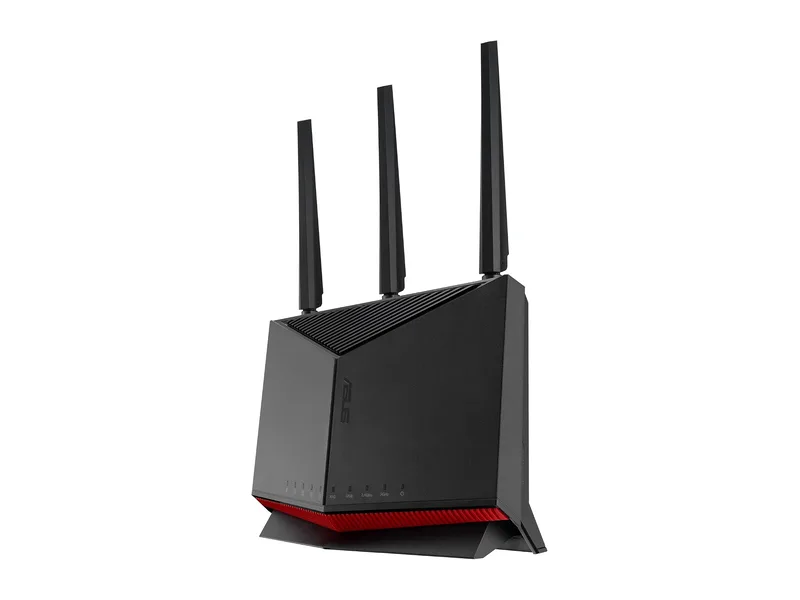
2. The features got bundled into things people already owned. Comcast added xFi Advanced Security to its gateways at no extra cost. ASUS shipped AiProtection (Trend Micro) free on most routers; TP-Link added HomeShield; eero sold eero Secure; Google, Amazon and Netgear followed. Once the router in the cupboard did threat blocking and parental controls, a second box that did the same thing — for a fee — was a hard sell.
3. Cloud-first design meant a single point of failure — the company. CUJO, Winston, Dojo and F-Secure Sense all needed the vendor’s servers to make decisions. When the vendor left the market, the hardware had no local fallback. Contrast the survivor below.
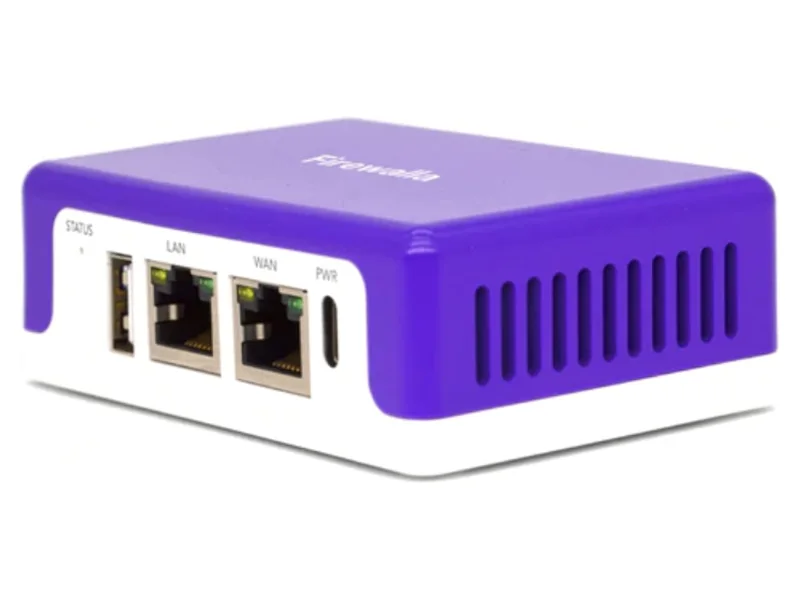
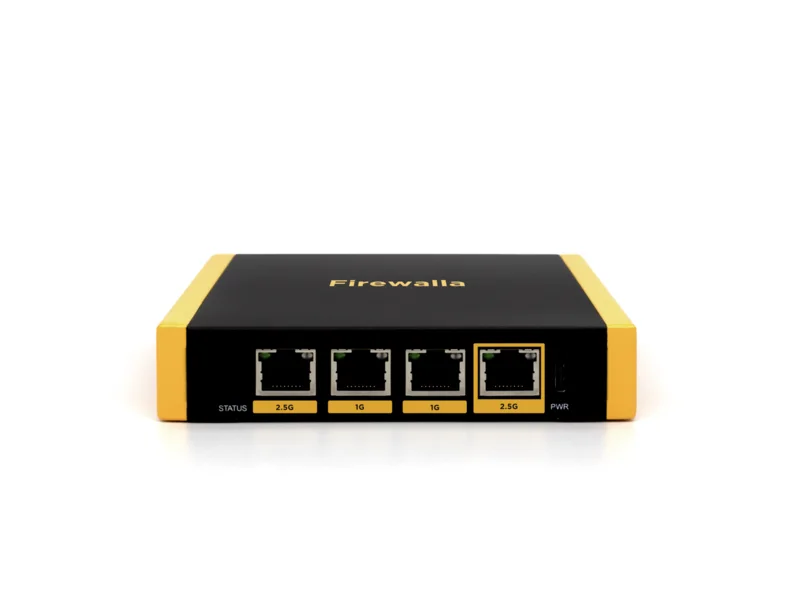
4. The one that lived charged more and ran locally. Firewalla launched in the same era, priced its Gold-series boxes at $400+ rather than $100–$200, put the inspection engine on the box rather than in the cloud, and has never charged a subscription. It is now the de-facto standard for a plug-in home firewall, and its existence is the clearest evidence that the category’s problem was the model, not the idea. (It has its own trade-offs — we cover them honestly in Is Firewalla worth it? — but “will it still work next year” is not one of them.)
What to buy instead in 2026
Match the replacement to what you originally bought the box for.
| You bought a CUJO / Akita / RATtrap / Dojo for… | The 2026 equivalent | Why |
|---|---|---|
| A plug-in box that watches the whole network without replacing the router | Firewalla Purple SE (plans up to ~500 Mbps) or Firewalla Gold SE (gigabit and faster) | Local IDS/IPS, ad blocking, per-device rules, VPN server and client, no subscription. The direct successor to what CUJO promised. See best hardware firewall for home. |
| A router with security built in (Norton Core, F-Secure Sense) | ASUS RT-BE86U or ZenWiFi BT8 (AiProtection, free) · GL.iNet Flint 3 / Flint 3e (AdGuard Home + VPN, OpenWrt) · Ubiquiti Dream Router 7 | Security features live on the router you were going to buy anyway; none of these needs a paid plan for the basics. |
| Parental controls and screen time across every device | Firewalla (rules by device group), or a router with free controls — see best router for parental controls | The subscription boxes rarely did this better than a modern router does. |
| Blocking ads and trackers for the whole house (Winston, Keezel’s pitch) | AdGuard Home on a GL.iNet router, or NextDNS/AdGuard DNS set at the router | DNS filtering does 90% of what a “privacy box” did, for $0–$20 a year, with no hardware. |
| A VPN for everything at home | Router-level VPN client on GL.iNet or Firewalla — how to set up a VPN at home | Same outcome, no extra box. |
| Peace of mind, no fuss, no new hardware | Your existing router with WPA3, automatic updates, UPnP off, a guest network for smart devices, and DNS filtering — our home network security guide walks through it | Most of the protection the boxes sold is configuration you already own. |
If you still own one of these boxes
- Unplug anything whose vendor is gone (CUJO, Winston, Dojo, and Akita until proven otherwise). An abandoned device with an internet-facing management service and no patches is a liability on your network, not a protection.
- Do not buy them second-hand, however cheap. eBay is full of sealed CUJO and Dojo units; they are paperweights.
- Norton Core and F-Secure Sense owners: the hardware still routes, but you are running a router that stopped receiving security updates in 2022–2023. Replace it.
- Bitdefender BOX 2 owners: confirm with Bitdefender that your subscription and app are still supported before renewing anything.
Dates and statuses from vendor announcements and support pages linked in the table, checked 18 August 2026. Where we could not verify a vendor’s current status, the table says so rather than guessing.